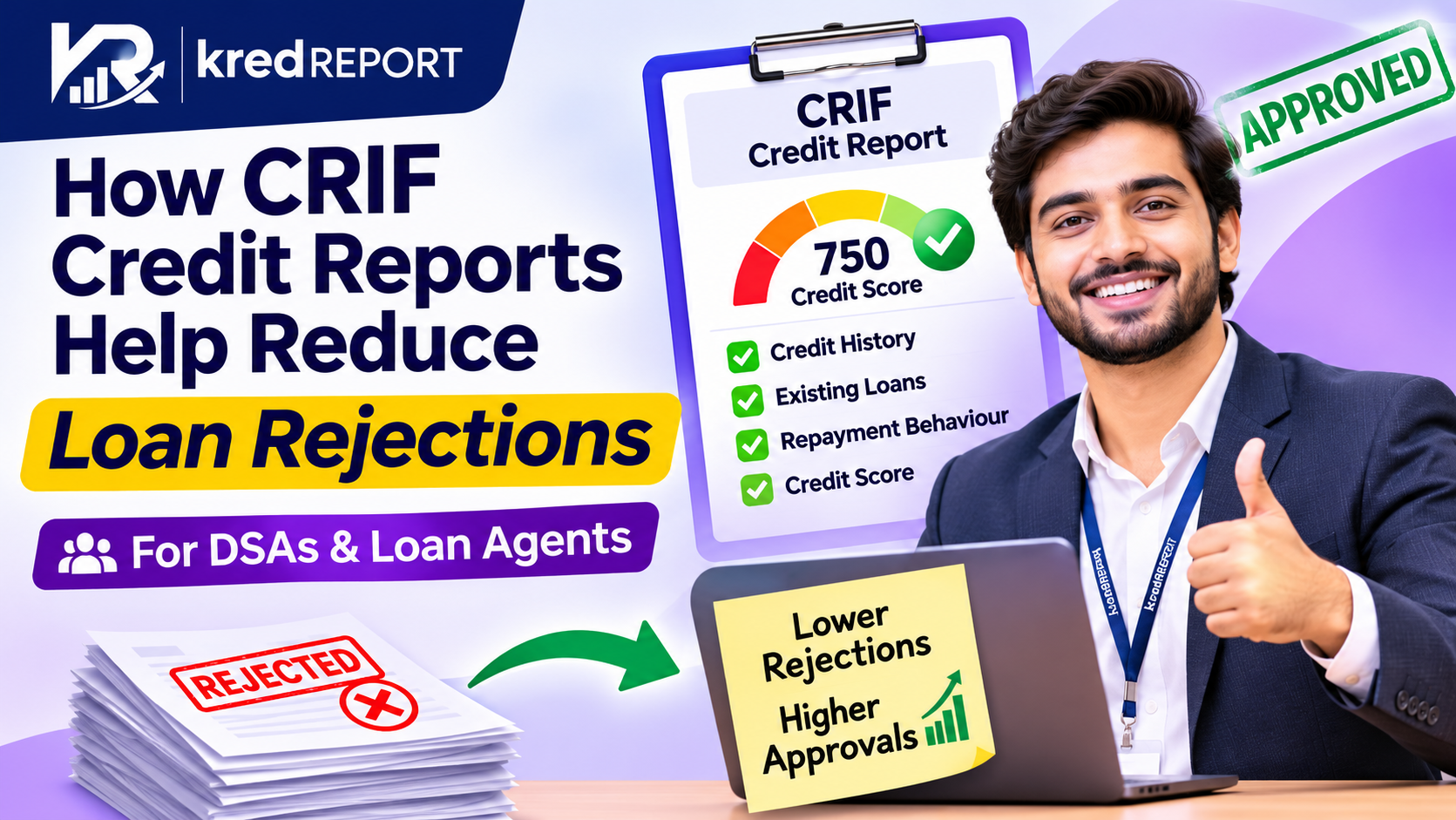
Getting a loan approved is not always easy. Sometimes, customers have a good salary and a stable job, but their loan application still gets rejected. The reason could be an existing loan, delayed EMI payments, a low credit score, or some other issue in their credit history.
For DSAs and loan agents, this can be frustrating. You spend time talking to customers, collecting documents, and processing applications, only to find out later that the customer does not meet the lender's requirements.
But what if you could identify some of these problems before submitting the application?
This is where a CRIF credit report can help.
By checking a customer's credit report at the beginning, loan agents can get a better idea of their financial history and make more informed decisions. Let's understand how it works.
What Is a CRIF Credit Report?
A CRIF credit report gives information about a person's credit history. It helps you understand how someone has handled loans and credit cards in the past.
Depending on the available information, a report may include:
-
Current and previous loans
-
Credit card details
-
EMI payment history
-
Outstanding loan amounts
-
Late payments or defaults
-
Recent loan enquiries
-
Credit score
In simple words, it helps loan agents understand a customer's credit background before moving ahead with a loan application.
Why Do Loan Applications Get Rejected?
There can be several reasons why a bank or financial institution rejects a loan application. Some common reasons are:
1. Low Credit Score
A low credit score can make lenders more cautious. It may indicate that the customer has faced repayment difficulties in the past.
2. Too Many Existing Loans
If a customer is already paying multiple EMIs, the lender may feel that another loan could increase their financial burden.
3. Late EMI Payments
Even a few delayed payments can affect a customer's credit profile. Lenders often check repayment history while reviewing applications.
4. Multiple Loan Enquiries
When someone applies for loans from several lenders within a short period, it may raise concerns during the credit assessment.
5. Incorrect Information
Sometimes, differences in personal details or incomplete documents can also create problems during loan processing.
The good thing is that some of these issues can be identified early by checking the customer's credit report.
How CRIF Credit Reports Help DSAs & Loan Agents
1. Check the Customer's Credit History Before Applying
Imagine a customer approaches you for a personal loan. Their salary looks good, and they are confident about getting the loan approved.
But before submitting the application, you check their CRIF credit report and find some previous payment delays.
Now you know there may be an issue. You can discuss it with the customer and understand the situation before moving ahead.
This simple step can help avoid applications that may have a higher chance of rejection.
2. Find Out About Existing Loans
Many customers already have personal loans, credit cards, or other EMIs.
Sometimes, they forget to mention all their existing financial commitments.
A CRIF credit report can help you check the credit accounts reported in the customer's name, along with available outstanding balance details.
This makes it easier to understand their current loan burden and repayment commitments.
3. Understand the Customer's EMI Payment History
A customer's repayment history tells you a lot about how they manage their finances.
If the report shows delayed EMI payments or missed payments, you can discuss these details with the customer.
This also helps you understand whether the customer needs to clarify any information before applying for another loan.
4. Identify Possible Problems Early
One of the biggest benefits of checking a credit report is that you don't have to wait until the bank rejects the application to discover a credit-related issue.
You can review the available information in advance, ask the customer about any concerns, and decide the next step accordingly.
This makes the initial screening process much easier.
5. Choose More Suitable Loan Options
Every bank and NBFC has its own loan eligibility rules.
Some lenders may have different requirements for credit scores, income, existing EMIs, and employment profiles.
When you understand the customer's credit history and financial situation, you can look for loan options that are more suitable for their profile.
This does not guarantee approval, but it can help avoid unsuitable applications.
6. Save Time and Build Customer Trust
Nobody likes hearing that their loan has been rejected, especially after spending time arranging documents.
When you check the credit report first, you can explain possible issues to customers before starting the application process.
It saves time, avoids unnecessary follow-ups, and helps customers understand their financial position better.
Why Should DSAs Check CRIF Credit Reports Regularly?
For DSAs and loan agents, every customer matters. Managing multiple applications at the same time can become difficult, especially when you don't have complete information about the customer's financial background.
Checking a CRIF credit report during the initial screening can help you:
-
Understand the customer's credit profile.
-
Check reported existing loans.
-
Review past repayment behaviour.
-
Identify possible credit-related concerns.
-
Make better decisions while selecting loan options.
-
Reduce avoidable loan application rejections.
In short, it helps you work in a more organised way and have better conversations with your customers.
How KredReport Can Help Loan Professionals
If you are a DSA, banker, or loan agent, having useful financial tools in one place can make your daily work easier.
KredReport provides credit-report-related services and other useful financial tools that loan professionals can explore for their everyday requirements.
Whether you want to check credit-related information or use tools such as EMI calculators, KredReport can help simplify some of your routine work.
Visit KredReport.com to explore the available services and tools.
A Few Things to Check Before Submitting a Loan Application
Before forwarding a customer's loan application, take a few minutes to review these points:
-
Check the customer's credit report with their consent.
-
Review their existing loans and outstanding balances.
-
Look for delayed EMI payments or defaults.
-
Understand their monthly income and existing EMI commitments.
-
Check the lender's eligibility requirements.
-
Make sure all documents and personal details are correct.
Following these basic steps can help you identify potential problems before the application reaches the lender.
Frequently Asked Questions
1. How does a CRIF credit report help loan agents?
It helps loan agents understand a customer's credit history, existing loans, repayment behaviour, and other reported credit details before submitting a loan application.
2. Can a CRIF credit report reduce loan rejection?
Yes, checking the report early can help identify possible credit-related issues and avoid some unsuitable applications. However, it cannot guarantee loan approval.
3. What details can DSAs check in a CRIF credit report?
Depending on the report, they can check credit score, loan accounts, credit card details, outstanding balances, repayment history, and credit enquiries.
4. Does a good credit score guarantee loan approval?
No. Banks and NBFCs also consider income, job stability, existing EMIs, documents, and their own eligibility policies.
5. When should loan agents check a customer's credit report?
It is better to check the credit report during the initial customer screening, with the customer's consent, before submitting the loan application.
Final Thoughts
Loan rejection is something every DSA and loan agent wants to avoid. While not every rejection can be prevented, checking a customer's credit report at the right time can help identify many possible issues early.
A CRIF credit report gives you a clearer picture of the customer's credit history and helps you make better decisions before moving forward.
So, before submitting your next loan application, take a moment to check the customer's credit profile.
A little checking today can save a lot of time tomorrow!
Visit KredReport.com to explore credit-report services and useful financial tools for loan professionals.
