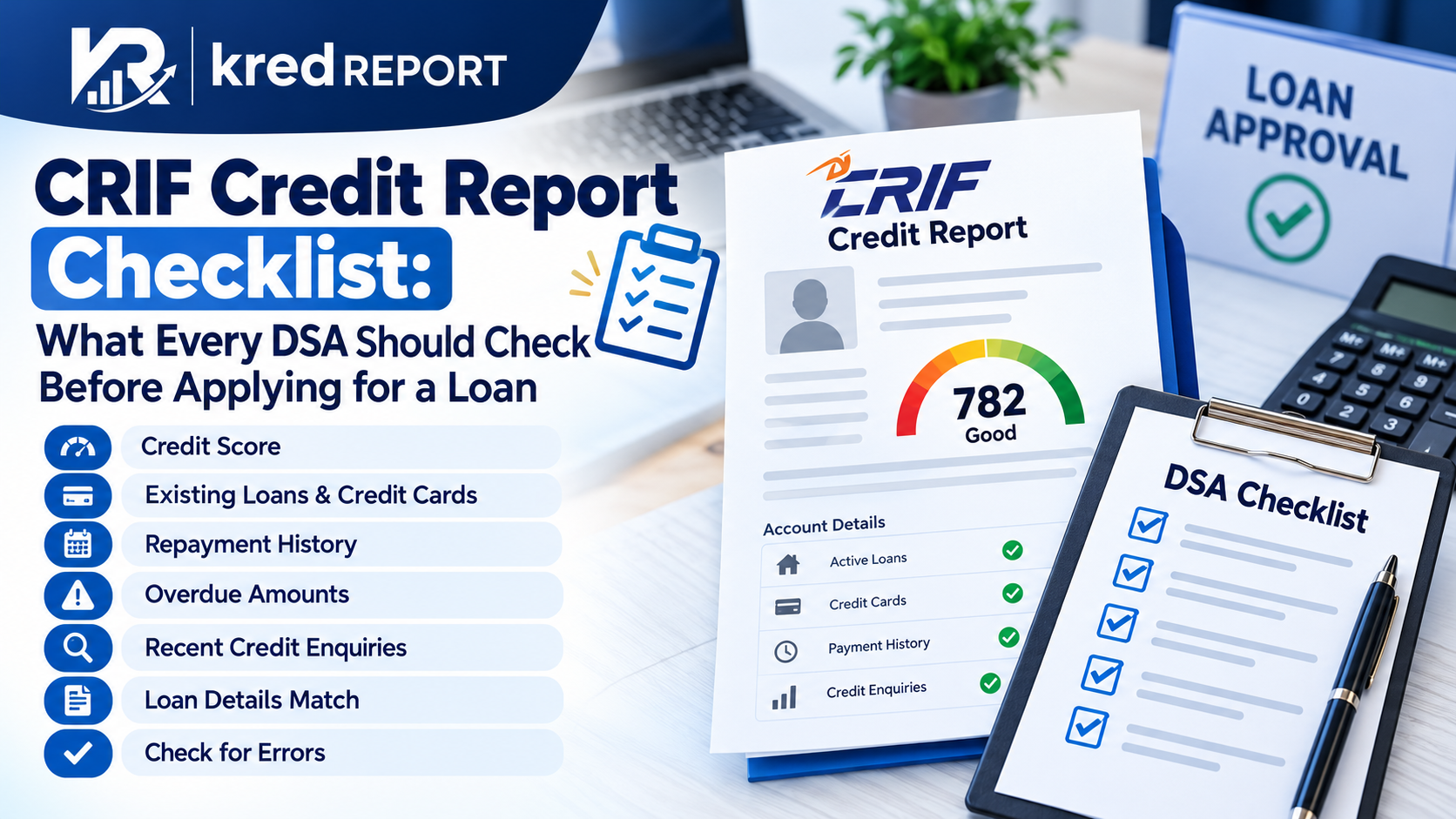
When a customer approaches you for a loan, checking their salary and collecting documents is not always enough. You also need to understand their credit history.
For DSAs and loan agents, a CRIF credit report can help you get a better idea of a customer's existing loans, past payments, and overall credit profile before sending their application to a lender.
But simply opening the report is not enough. You should know what to look for and which details may need further checking.
In this blog, we'll explain the important things every DSA should check in a CRIF credit report before moving ahead with a loan application.
1. Check the Customer's Credit Score
The credit score is usually one of the first things people notice in a credit report. It gives a quick idea of a customer's credit history, but remember that a score alone cannot tell you everything.
For example, two customers may have similar credit scores, but one may have several ongoing loans while the other has fewer financial commitments.
As a DSA, use the score as a starting point. Then look at the other details in the report and check the lender's eligibility requirements.
2. Look at Existing Loans and Credit Cards
Before applying for another loan, it's important to understand how much the customer is already paying every month. A customer may have a personal loan, a bike loan, and one or more credit cards. These existing commitments can affect how much additional EMI they can manage.
For example, if someone earns ₹35,000 per month and already pays ₹15,000 in EMIs, their ability to handle another loan needs careful assessment.
A CRIF credit report can help you identify reported loan accounts and credit facilities. You should also confirm the details with the customer and other relevant documents.
3. Check the Repayment History
Does the customer usually pay their EMIs on time, or does the report show delayed payments?
Repayment history is an important part of understanding a customer's credit profile.
If you notice late payments or overdue amounts, don't immediately assume the application will be rejected. First, understand what happened and whether the information is accurate.
Sometimes, the customer may have already paid an amount, but the report may not yet reflect the latest update. In such cases, ask for supporting documents and verify the details.
This helps you have a more informed conversation before submitting the application.
4. Look for Overdue Amounts
An overdue amount means that a payment is reported as unpaid past its due date. It may relate to a loan EMI or a credit card payment.
For example, a customer may tell you that all their loans are running smoothly, but the report shows an overdue amount on an older account.
This is something worth checking.
Ask the customer about the account and verify its current status. If the information is incorrect, they may need to contact the lender or credit bureau to get it corrected.
Checking overdue details early can help avoid confusion later in the application process.
5. Check How Many Recent Credit Enquiries Appear
A credit enquiry may be recorded when a lender checks a customer's credit report in connection with a credit application.
If the report shows several recent enquiries, it may be worth asking the customer whether they have recently applied for loans or credit cards with other lenders.
However, don't assume that multiple enquiries automatically mean a customer is financially risky. Look at the full situation and the lender's assessment criteria.
The purpose is to understand the customer's recent credit activity, not to judge them based on one detail.
6. Check Whether the Loan Details Match
Sometimes, the information a customer provides may not match what appears in their credit report.
For example, a customer may say that an old loan has been closed, but the report still shows it as active.
This doesn't automatically mean the customer is wrong. The information may need an update, or there may be a difference in the account details.
Ask the customer for the loan closure certificate or other relevant proof, where applicable, and verify the status with the lender or reporting institution. It's better to clear up these differences before relying on the information in the application.
7. Understand the Customer's Overall Financial Situation
A credit report is useful, but it should not be the only document you check.
You should also understand the customer's monthly income, job or business stability, bank statement, and existing expenses.
For example, a customer may have a good credit score but limited income after paying their current EMIs. Another customer may have a lower score but a different financial situation that needs further review.
Every application is different. Looking at the complete picture helps you understand the customer's position more clearly.
8. Check for Errors or Unfamiliar Accounts
Have you ever seen a customer surprised by a loan account they don't recognise?
Credit reports can sometimes contain incorrect, outdated, or disputed information. A customer may also have concerns about an unfamiliar account or payment entry.
If you notice something unusual, don't treat it as confirmed information without checking.
Ask the customer to review the entry and follow the appropriate dispute process with the credit bureau or lender if necessary.
This is especially important when the information could affect the customer's loan application.
Quick CRIF Credit Report Checklist for DSAs
Before proceeding with a loan application, use this simple checklist:
-
Review the credit score and overall credit profile.
-
Check reported existing loans and credit cards.
-
Look at repayment history and delayed payments.
-
Identify any reported overdue amounts.
-
Review recent credit enquiries.
-
Check whether loan details match the customer's information.
-
Look for entries that may need correction.
-
Compare the report with income proof and bank statements.
-
Review the lender's eligibility criteria before submitting the application.
Following this checklist can help you organise your initial screening process and identify questions that need answers.
Make Credit Checking Easier with KredReport
Checking a credit report is an important step in the loan application process. When you understand what to look for, it becomes easier to spot details that need clarification and have better conversations with customers.
KredReport offers tools and services designed to support finance professionals in their day-to-day work, including CRIF credit report services, an EMI calculator, and bank statement summary tools.
Visit KredReport.com to explore the available services and see how they can fit into your loan-processing workflow.
Final Thoughts
Before applying for a loan on behalf of a customer, take a little time to understand their credit profile.
Check their existing loans, repayment history, overdue amounts, and any details that don't seem to match. Then review the information alongside their income and other documents.
A few careful checks at the beginning can help you prepare a more complete application and guide your customer with clearer information.
Remember: A credit report is a helpful starting point, not a guarantee of loan approval.
